
On April 2, 2025, Trump announced “Liberation Day” and introduced so-called “reciprocal” tariffs on more than 60 of the world’s economies, citing the U.S.’s trade deficits with these states and emphasizing the supposed trade barriers that boxed out American goods from the affected countries’ economies. Even though the tariffs applied have been widely criticised as inconsistent and calculated in a superficial manner, the initial impact seen in the stock market caused a 3.5% decrease in the S&P 500 and a 4.4% decrease in the Nasdaq 100, with stock markets continuing to plummet further. Despite the 90-day partial suspension of tariffs on all countries except China being announced on April 9, the stock market has not yet fully recovered.
The “Liberation Day” tariffs are likely to affect the inflation rate not only in the U.S. but also globally, as countries now have to evaluate their supply chains and trade partners while the United States begins to pursue isolationist policies that limit free trade.
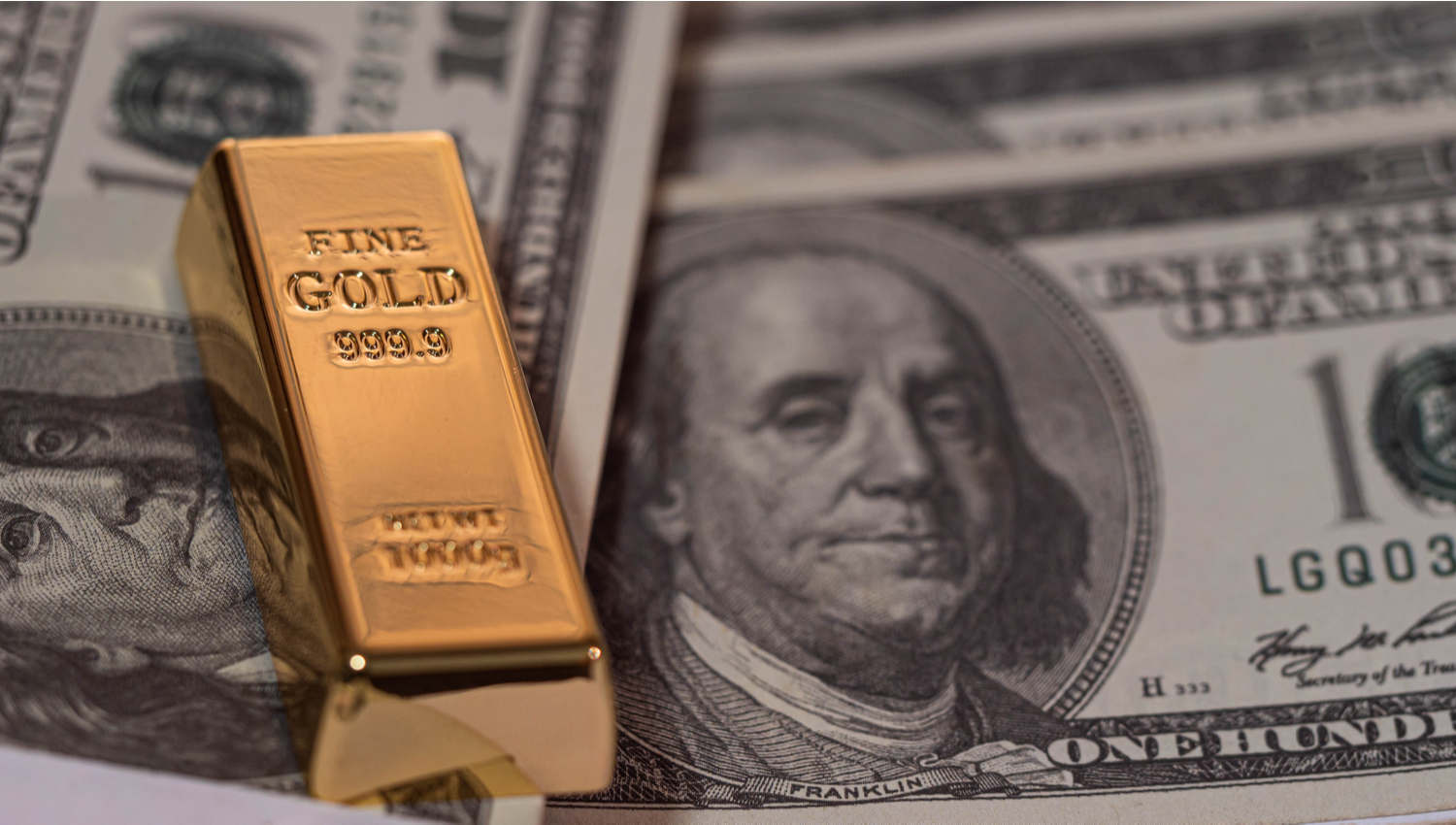
This is where gold comes in. Gold has always been considered an inflation hedge, but in recent times, its value has reached an all-time high. Usually, during times of uncertainty, the U.S. dollar and U.S. Treasury bonds are considered the go-to assets to hold. In general, they are stable and reliable—especially the U.S. dollar, which remains the primary reserve currency in the global economy. However, the EUR/USD exchange rate reaching a three-year peak is fueling speculation about a potential shift in the dollar’s role in the future. As a result, investors are turning to the rare-earth metal, with gold futures reaching a never-before-seen high on the Commodity Exchange (COMEX).
Gold, as an inflation hedge, is often viewed as a way to preserve purchasing power when the U.S. dollar decreases in value. What sets gold apart from other inflation hedges is its historical significance and well-established role as a store of value. It is well known that the U.S. dollar was fixed to the price of gold until the 1970s, which has given gold a reputation that is hard to match. Additionally, unlike money, gold cannot be printed at will by central banks, as it has a natural quantitative limit—only a finite amount of it exists on the planet.
The U.S. has rarely experienced a presidential administration like the current one. Due to its unorthodox and erratic economic policies, the U.S. dollar’s reputation as a safe and reputable asset has been called into question, potentially leading to a permanently lower valuation of the currency. This has had a significant impact on gold prices on the COMEX. Since gold is typically seen as having an inverse relationship with fiat currencies, a sustained decline in the value of the U.S. dollar could result in a long-term increase in the valuation of the rare-earth metal. This would be unprecedented, as gold has traditionally been considered a less attractive investment compared to U.S. Treasury bonds and the dollar due to its volatility. However, as mentioned earlier, that perception is beginning to shift. The “Liberation Day” tariffs not only contributed to the decline in the dollar’s value but also triggered a nosedive in the American stock market. Typically, there is an inverse correlation between these two things—when the stock market drops, investors tend to flock to safer assets, increasing demand for the U.S. dollar. Such fundamental discrepancies are leading people to fear a possible onset of stagflation in the US.
Stagflation, as the name suggests, is the simultaneous occurrence of both economic stagnation and inflation. It is particularly difficult to combat because the traditional tools used to reduce inflation or stimulate economic growth are often ineffective in this scenario. In a situation where stagflation becomes prevalent, gold would serve as an effective inflation hedge. If the U.S. dollar continues to decline in value, gold may solidify its position as the preferred safe-haven asset—one that can be relied upon to help mitigate potential decreases in purchasing power.
To conclude, the current global economic situation is very turbulent and unpredictable. However, the current trends indicate that gold may continue to gain popularity as the US global economic hegemony may be starting to come to an end. Gold’s reputation as a safe-haven asset, along with its historical significance, positions the rare-earth metal as the inflation hedge of choice for many investors.
– Kristaps Julijs Jaspers