
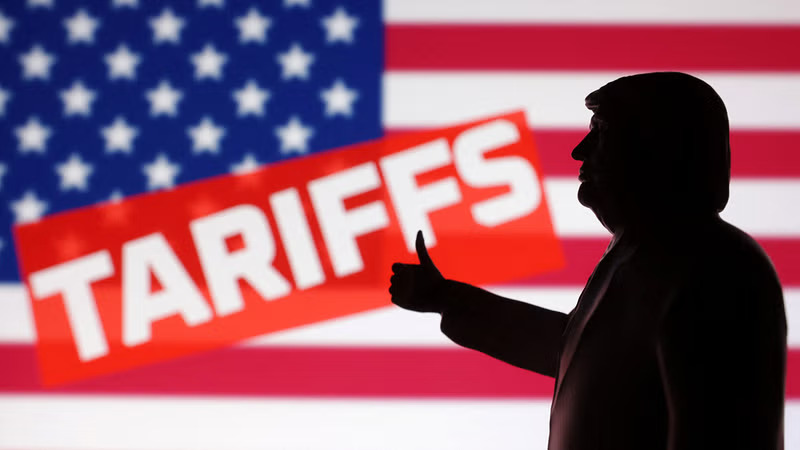
Markets reacted strongly to the recent tariff announcements, and it wasn’t just about the tariffs themselves – it was about everything they brought with them. One of the biggest reasons for the drop was uncertainty. Financial markets really don’t like unpredictability, and tariffs added a lot of it. Suddenly, investors were facing a bunch of new questions: Would other countries strike back with their own tariffs? Could these taxes spread to other industries? What would the Federal Reserve do in response? All this uncertainty made people nervous, leading to a sharp sell-off. The S&P 500 dropped almost 10% in just one week, and other major markets in Europe and Asia also saw big declines. It wasn’t only the economic effects of the tariffs that frightened the investors—it was the fear of not knowing what could happen next.
Another major issue was how tariffs disrupted global supply chains. These days, most products are made with parts from different countries. Cars, electronics, and other goods rely on a complex system where parts come from all over the world. The new tariffs acted like a tax on this whole system, making imported materials, especially from China and Southeast Asia, more expensive. That hit company profits right away, especially in industries like auto and tech. Since earnings forecasts are a big part of what drives stock prices, markets reacted negatively. According to CNN Business, the OECD (Organisation for Economic Co-operation and Development) even predicted slower U.S. GDP growth this year, down to 2.2%, largely because of supply issues and rising costs.
Tariffs also raised concerns about inflation. When it costs more to bring goods into the country, companies either have to take the hit themselves or raise prices for consumers. If they raise prices, it leads to inflation, which can reduce people’s buying power and hurt the economy overall. Investors were worried that rising inflation would cause the Federal Reserve to raise interest rates. If that happens, borrowing becomes more expensive, which could further hurt company profits and reduce consumer spending. The OECD now expects inflation to hit 2.8% in 2025, which is higher than previous estimates.
Then came the fear of retaliation. After the U.S. imposed its tariffs, countries like China and Canada responded with their own. China targeted American agricultural products, while Canada slapped a 100% tariff on Chinese electric vehicles and taxed Chinese steel and aluminum. This kind of back-and-forth is often called a “trade war,” and history shows that trade wars can slow down global economic growth. The World Bank warned that this situation could cut global GDP growth by 0.3 percentage points this year. Trade wars are also linked to past recessions, like during the 1930s and the more recent 2018–2019 U.S.–China tensions.
Lastly, business leaders themselves seem pretty worried. Larry Fink, the CEO of BlackRock, told The New York Post that many CEOs already think we’re in a recession. A CNBC survey showed that nearly 70% of top executives expect a downturn before the end of the year. When corporate leaders start holding back on hiring, delaying projects, or cutting costs, it sends a bad signal to the market. Investors pick up on that and assume earnings will fall and growth will slow, which pushes stocks down even more.
Overall, the market didn’t just react to the tariffs—they reacted to what those tariffs represented: higher costs, slower growth, and a more uncertain economic future.
– Vykintas Bazys