
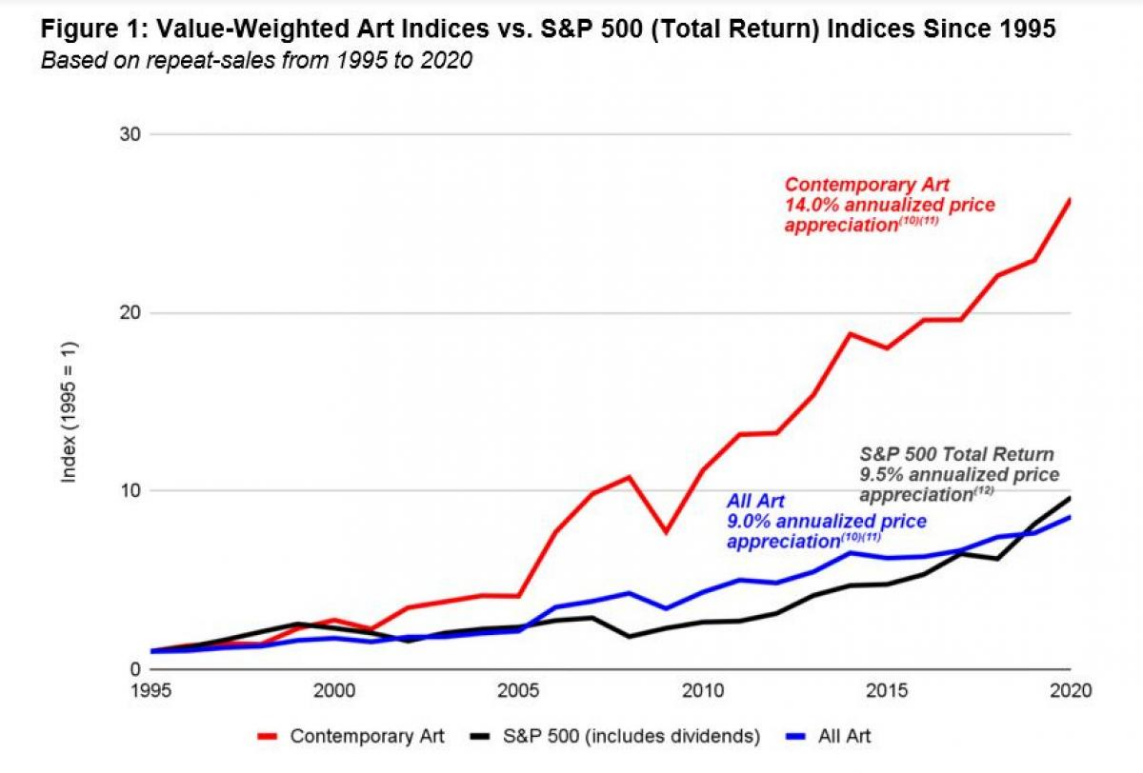
Generally, it’s agreed that diversifying your investment portfolio is beneficial, as it diversifies income streams and reduces exposure to risk. So, why not invest in art? After all, the art market has a low correlation with the stock market, meaning that during economic crises, the value of art is often less affected, helping to stabilize your portfolio. Additionally, the contemporary art market (art made after 1945) has been reported to outperform the S&P 500. However, this evidence is not as reliable since, unlike the stock market where almost everything is tracked, the art world lacks a centralized database for tracking the performance of all art. Instead, data on the art market comes mainly from auction houses, which can selectively disclose information, introducing a selection bias. Given this limitation, the comparison shown in Figure 1 should be taken with a grain of salt.
While the art market generally trends upward, it’s essential to remember that past performance does not guarantee future results and that returns can vary widely between artworks. Two examples illustrate this variability. The first is Gustav Klimt’s Portrait sold by Oprah Winfrey. She bought it in 2006 for $87.9 million and sold it for $150 million in 2017, representing a 71% appreciation, or approximately 6.5% per year. The second example is Beautiful Mider by Damien Hirst. It was sold for £670,000 in 2008, but in 2017, it fetched only £449,000—a 33% decrease, translating to about a 3.7% annual depreciation. While these differences in returns resemble stock value fluctuations, art investment also entails two additional considerations: storage and upkeep.
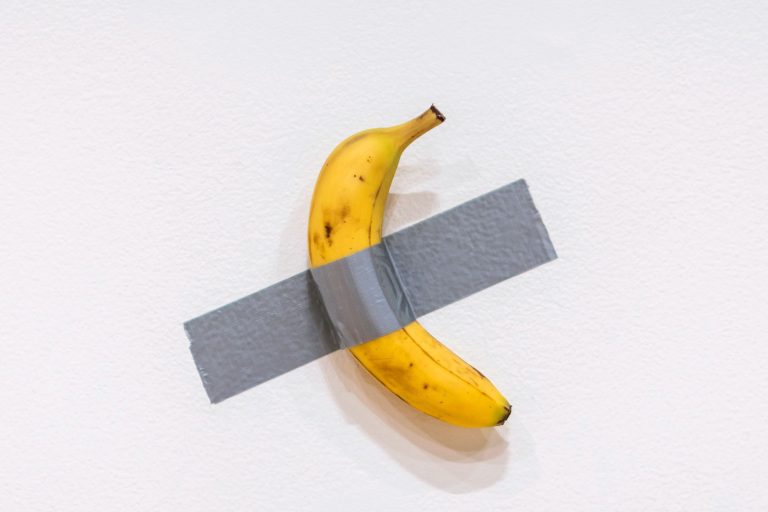
Storage is straightforward; as a physical asset, art requires a place to be kept. Upkeep, however, might not come to mind immediately. High-value artworks can take years to sell, and in the meantime, they may require restoration as paints dry, flake, or fade, incurring additional costs. Often, with the sale of an artwork, specific upkeep instructions accompany the piece. An extreme example is Maurizio Cattelan’s Comedian (the banana taped to a wall at Art Basel), which came with instructions advising that the banana be replaced every ten days and re-taped to the wall.
Most artworks are quite expensive, including the banana one, so even if we assume the graph’s data is reliable and art investment is beneficial, how can non-millionaires participate? There are two options: finding an emerging artist and buying their work before they become popular, or purchasing shares of an artwork through an art investment platform like Masterworks. If the name Masterworks rings a bell, it’s likely from their prominent advertising campaign on YouTube, where they highlight reasons why investing in art is worthwhile. Masterworks enables people to invest in art by issuing shares for specific artworks it buys. Then, either the artwork is sold after some years, with profits distributed to shareholders, or if shareholders wish to exit sooner, they can resell shares to other users. However, this secondary market operates with less liquidity than stocks, as demand and supply for art are more limited.
Though platforms like Masterworks make art investment accessible to individuals with smaller budgets, there are some caveats. First, the art trading industry is far less regulated than the stock market, offering fewer safeguards. Second, Masterworks charges various fees, including a 1.5% annual management fee, a 20% profit share after a sale, and additional undisclosed fees for shipping, handling, and marketing, which vary by artwork. Additionally, the minimum investment required is $500. While Masterworks offers a pathway to invest in art, the combination of limited data, a less-regulated industry, and high fees may make it less appealing as an investment option.
In conclusion, investing in art can add a unique layer of diversification to your portfolio, benefiting from a low correlation with traditional markets and potentially reducing exposure to downturns. However, art investment isn’t without its challenges, including upkeep, storage, data limitations, and industry-specific fees. Platforms like Masterworks offer accessibility to non-millionaires, but prospective investors should take these factors with a grain of salt. Art can be rewarding both financially and aesthetically, yet a careful approach is essential given the inherent risks and costs.
– Domeniks Gregors Rozins