
On October 20, 2025, Amazon suffered a major outage in its cloud hosting service – AWS. Their default cloud hosting server, US-EAST-1, experienced DNS resolution issues, causing nearly 17+ million outage reports globally. Services affected by this outage ranged from banking, such as Bank of Scotland, to social media like Snapchat and the online game Roblox. Even though the outage only affected the US-EAST-1 server, the damage was done worldwide. The damage done by the outage is estimated to be $581 million over a few hours.
It is estimated that 94% of major companies worldwide utilize cloud computing. This metric shows how dependent the tech industry is. If the services of these firm’s malfunction, the damage caused can reach millions of dollars in minutes.
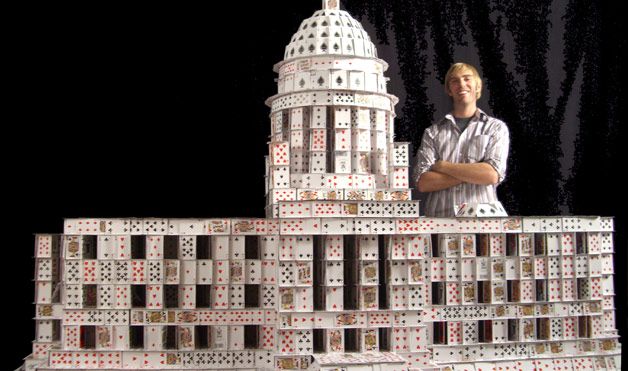
In this situation, the Tech Industry could be described as a house of cards. One card falls off, and the entire house is destroyed. In real life, a million or even billions of dollars are the equivalent of a destroyed house.
But the cloud computing industry isn’t the only card holding the house together.
Open-source projects are another card that could cause our house to collapse. Open-source projects usually depend on a few people contributing to these projects for years. Many of them do it for free, without pay. Since maintaining these projects largely is a project of choice rather than profit, many people abandon them. Most businesses use open-source software in one way or another. For example, ZX Utils is a data compression tool that is a part of most Linux distributions. In 2024, ZX Utils got backdoored, and the damage that could have been done could be measured in billions of dollars. Fortunately, the backdoor was caught by a Microsoft engineer by pure luck. This time, the crisis was averted, but the tech industry’s house of cards could have fallen apart if the backdoor hadn’t been detected.
And, most likely, the biggest and most important card for the tech industry is semiconductors. In 2025, it was estimated that a single company, TSMC, owns 67% of the world’s Semiconductor foundries. If anything were to happen to this firm, the crisis would be unimaginable. There isn’t any other company that can produce semiconductor foundries at that capacity or price that TSMC can do. The result of this will be a shortage in production lines of any product that uses semiconductors, starting from phones and ending with satellite communications.
Even if our house of cards is stable itself, the ground where it’s located could experience an earthquake. You may ask what the ground and the earthquake are in this scenario? Underwater data cables. The global internet is connected through long cables located underwater all over the world. The location of these cables is public, and they are usually located close together for easier access. The question is, what happens if someone decides to rip these cables? An earthquake happens, and the entire world could lose access to the internet. Damage in this case would be unimaginable.
Nowadays, companies in the tech industry are chasing profits. They are trying to outsource everything possible to save money. By saving money, they increase their profit margins and become richer… But on the other hand, they give away their freedom and flexibility. This is a risky game. Once one card in this house of cards falls, the entire house will collapse. Then, firms that managed to stay independent would thrive. Will we ever see this house of cards collapse? Given the stakes, we can only hope not…
-Artis Lipša