
Insider trading refers to the buying or selling of publicly traded stocks or other financial securities based on material, non-public information. Obviously, this practice is strictly prohibited to maintain fairness and integrity in financial markets. At the same time, politicians in the United States don’t face the same restrictions when it comes to financial markets. Basically, this means that politicians, who often have access to sensitive information about new laws or regulations, as well as those who approve government contracts, are still allowed to trade stocks. I asked Ģints Roberts Bērziņš, a former Wall Street investment banker, what he thought about this during his guest lecture. From his point of view, “the fact that the same politicians who are responsible for approving or rejecting government contracts also have access to publicly traded stocks is deeply concerning.”
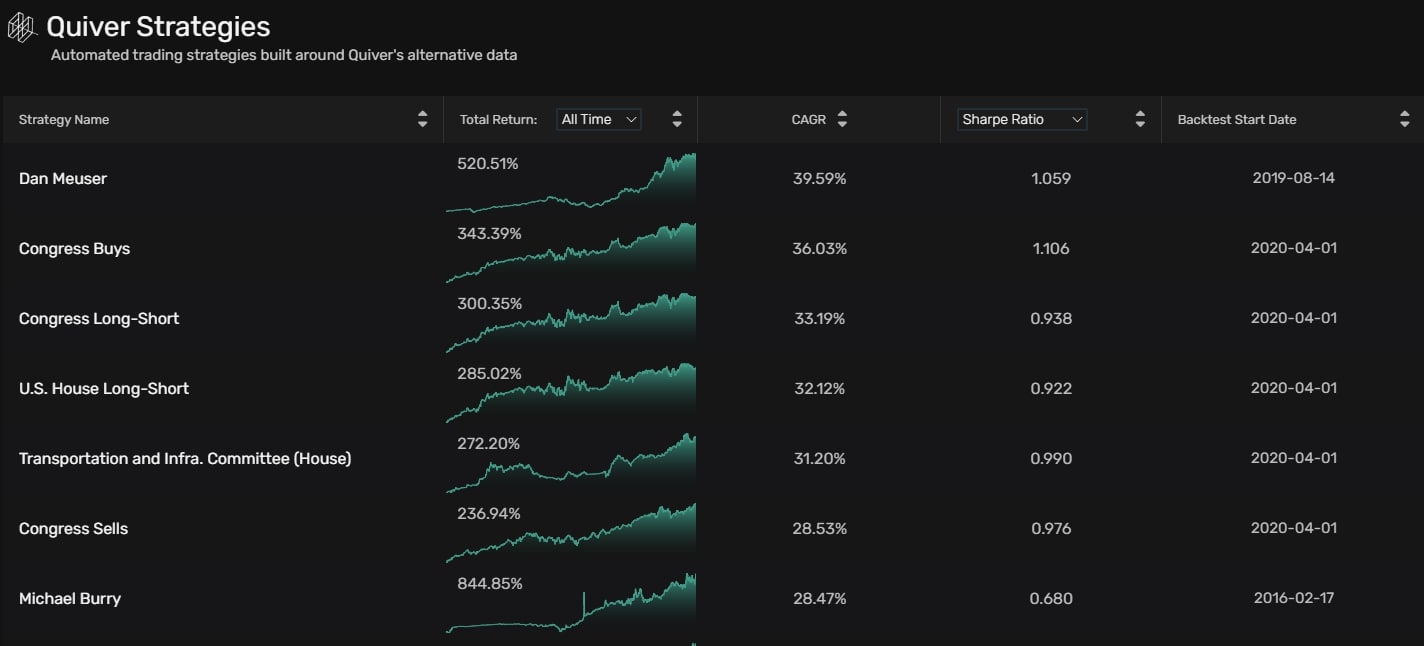
In today’s digital era, information is more accessible than ever before. The Stop Trading on Congressional Knowledge (STOCK) Act, enacted in 2012, was designed to combat insider trading among U.S. government officials. It requires government employees to disclose their financial transactions promptly. One notable platform that provides detailed data on such activities is Quiver Quantitative, which posts about newly disclosed trades, lobbying news, etc. on X (Twitter) and the website. It enables users to track stock trading by U.S. Congress members, view recent trades, search by politician or stock, and identify the most active traders in both the Senate and House of Representatives. Quiver Quantitative also offers a subscription-based service featuring exclusive strategies, such as “Congress Buys” or “Top Lobbying Spenders”, which ease the process of following or even copying politician’s portfolios.
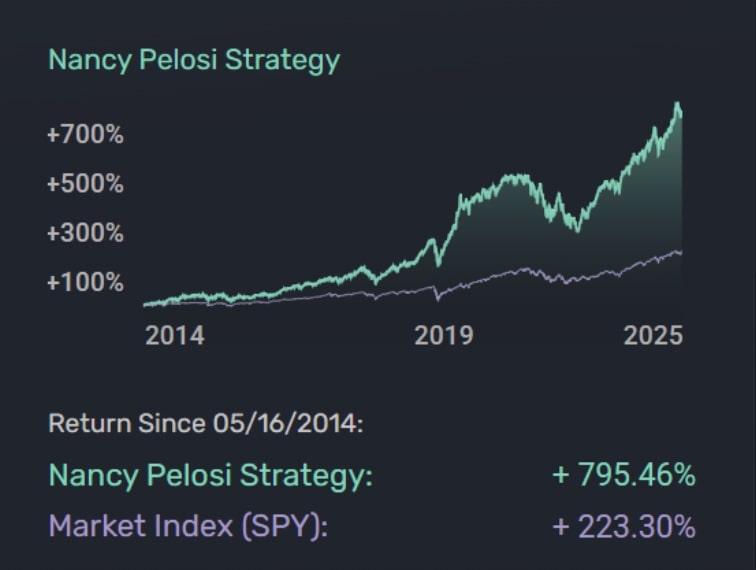
Nancy Pelosi serves as a vivid example of a highly successful trader among government officials. In 2024, her stock tracker showcased on the Autopilot trading platform, achieved a remarkable 70.9% gain—outperforming nearly all hedge funds (Yahoo Finance, 2025). For context, the S&P 500, which experienced a bullish year, rose by 25% over the same period. According to Quiver Quantitative, Pelosi’s portfolio has surged by an extraordinary 795.46% since 2014, vastly outpacing the S&P 500’s 223.30% gain during that time. Among her most notable recent moves, Pelosi sold 31,600 shares of AAPL (Apple) for $7.91 million and 10,000 shares of NVDA (Nvidia) for $1.34 million on December 31. Apple has fallen 8.2% since then, highlighting Pelosi’s well-timed decision. In January 2025, she also acquired stock options in major players such as Alphabet (GOOG), Amazon(AMZN), Palo Alto Networks (PANW), Tempus AI (TEM; has risen by 50+% in one week after the trade) and Vistra (VST).
 Recently, President Trump has announced a private-sector $500 billion investment in AI infrastructure, with Arm, Microsoft, NVIDIA, Oracle, and OpenAI as the key initial technology partners. The buildout is currently underway, starting in Texas. Why should this capture our attention? The lady has purchased 50 call options (a bet on the price going higher) in Vistra (VST), a leading energy (including nuclear energy) company based in Texas, with a strike price of $50 and an expiration date set for January 2026. Goldman Sachs stated that nuclear energy is positioned as a key solution for the growing energy needs of AI-driven data centers due to its ability to provide consistent, large-scale power with near-zero carbon emissions. The investment, estimated to be worth between $500,000 and $1 million, is a clear reflection of confidence in Vistra’s strong perform this year, marked by a 24% surge in its stock and likely involvement in this ambitious AI project.
While this strategy might seem like a money glitch, it’s important to emphasize that not every politician’s trades turn out to be wildly successful. Financial decisions always carry a level of risk, and they should be approached with responsibility and a cool mindset. Keeping an eye on newly published trades can offer interesting insights and inspiration, but it’s crucial to remain a rational investor. Blindly following moves without understanding the broader context or your own financial goals can lead to unfavourable outcomes. Always do your own research, weigh the risks, and invest wisely.
– Kirills Rubans