
The mining industry is one of the largest industries worldwide, involving thousands of companies and supporting everything from printers to electric cars with the necessary materials. It is estimated that the industry is valued at approximately $1.6 trillion. However, the same digital disruption that transformed the automotive, media, and education sectors could also completely reshape the trajectory of mining.
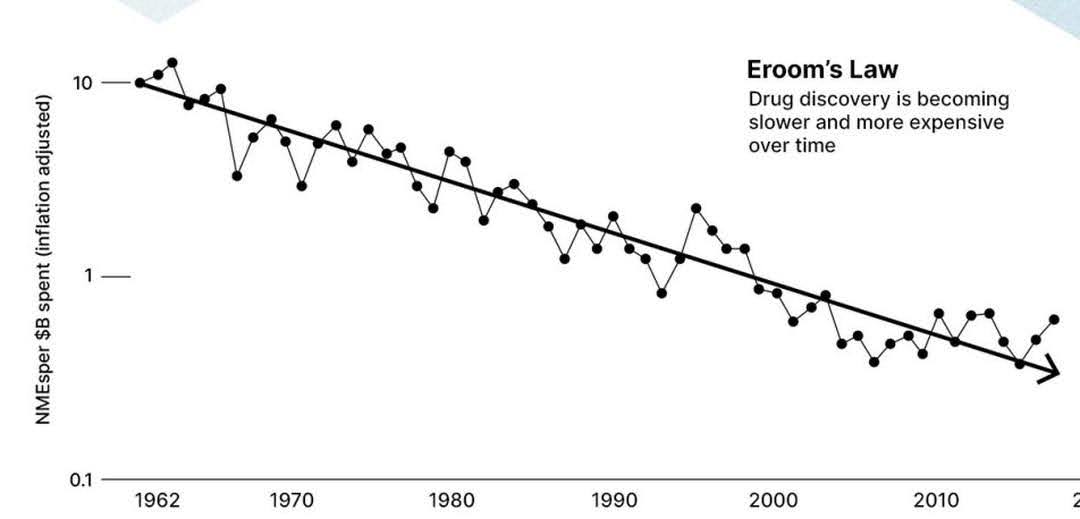
It is becoming increasingly difficult to find new mining discoveries. One mining CEO has compared the industry’s struggles to Eroom’s Law—a reversal of Moore’s Law—where the number of discoveries per dollar of exploration capital is decreasing exponentially. This challenge has led some firms to innovate by leveraging artificial intelligence (AI) and data analytics.
More mining operations are now using AI to identify mining sites. The traditionally long and tedious job of finding new mining locations is becoming significantly faster and more cost-efficient, reducing reliance on manual labor. AI systems process vast amounts of geological data, satellite imagery, and historical exploration records to detect previously unnoticed or overlooked sites, as well as identify new ones.
For example, Stratum AI has reported that its prediction accuracy has improved by over 50% due to AI implementation. This increase marks a significant step toward reducing costs associated with inaccurate site predictions.
A relatively new Silicon Valley-based mining company, KoBold Metals, has recently gained backing from high-profile investors, including Bill Gates and Jeff Bezos. The company was recently valued at $2.96 billion.
KoBold’s mission is to make mineral discovery more efficient and systematic through AI-driven exploration. The company estimates that $10 trillion worth of lithium, cobalt, nickel, and copper needs to be mined to meet the rising demand for the green energy transition.
Recently, KoBold leveraged AI technology to locate a significant copper deposit in Zambia. They are on track to mine 300,000 tons of copper annually, significantly contributing to Zambia’s national target of 3 million tons.
With over 70 projects underway, KoBold is also building the world’s largest collection of geoscience data. The company collaborates with major mining firms such as BHP and Rio Tinto and is considering a public listing within the next five years.
Investing in AI-driven mining firms like KoBold Metals could offer significant returns if successful discoveries are made. However, geopolitical instability, fluctuating commodity prices, and technological adoption barriers remain key risks. Professional expertise and insider knowledge are crucial for navigating the complex landscape of mining investments.
The mining industry is beginning a technological revolution, with AI and data-driven solutions making operations more efficient, cost-effective, and sustainable. Companies like KoBold Metals, Boston Metal, Stratum AI, and major mining giants adopting AI are leading the charge in modernizing the sector.
While the future looks promising, investors must remain aware of the risks associated with commodity markets, geopolitical challenges, and technological adoption. Those willing to take a calculated risk on AI-powered mining firms could benefit from the next generation of mineral discoveries fueling the green energy transition.
– Kristers Meijers