
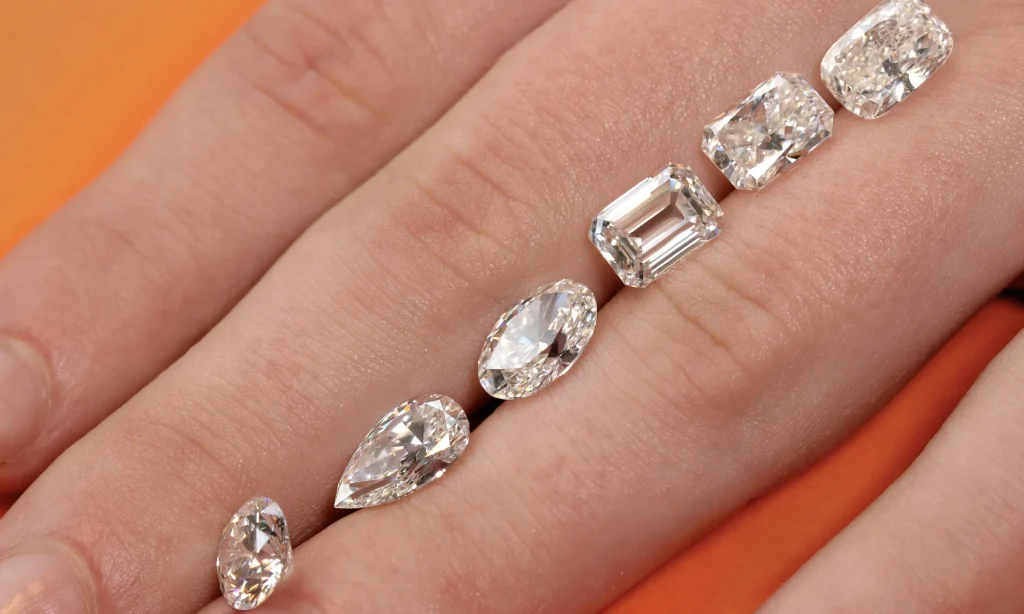
For a long time, natural diamonds have been a sign of wealth and luxury because of their scarcity. They were used for talismans in ancient India, as jewelry in the Renaissance, and in more recent times they even found their way into industrial applications because of their atomic bond structure. However, technological breakthroughs in the 20th century made it possible to create lab-grown diamonds using chemical vapor deposition, and high pressure and temperature. Lab-grown and natural diamonds are visually identical to the naked eye and even under the microscope. Both share the same color, form, sparkle, and almost identical structure. Nonetheless, the most crucial difference for both consumers and producers is the cost. A 2-carat natural diamond might sell for $15,000–$20,000, while a lab-grown version can be priced as low as $1,000–$2,000. That’s a difference of nearly 90%. This raises an interesting question: how did this dramatic shift in price influence the industry, or was it the industry that shaped the price?
Back in 2015, lab-grown diamonds made up only about 1% of total diamond sales. Looking at 2025, they now account for roughly 40% of global diamond jewelry purchases. This shift is largely driven by massive production growth in China and India, where new laboratories and factories are rapidly expanding their capacity. As supply has grown, prices have declined. That pressure from affordable substitutes can be felt in the natural diamond market as well, contributing to a 20–30% drop in natural-diamond prices in recent years. But this is not a sign to sell your grandmother’s rings. A large difference still shows up in resale value. Natural diamonds often retain 40–60% of their original price in the secondary market, while lab-grown diamonds usually resell for less than 20%, as their supply keeps increasing and production technology keeps getting cheaper. In other words, they’re affordable upfront but have unpredictable future value, with no clear sense of what they’ll cost in the future.
But is it really just about the cost? In recent years, global values have also changed, shifting people’s attitudes toward tradition and what they consider meaningful. Many couples are now perfectly fine with lab-grown diamonds because the sentimental value matters more to them than showcasing wealth. It mirrors the broader trend of people being comfortable with “dupes” when they deliver the same results. Sustainability has also become one of the factors when deciding between “real” or “fake” jewelry. Consumers are paying closer attention to where their diamonds come from. Traditionally mined diamonds that are labeled as “blood” diamonds are increasingly criticized for their unethical and environmentally harmful upbringing, facing a path similar to natural fur. Additionally, marriage rates have dropped significantly, also reducing overall demand, since by a recent study 45% of diamond jewelry are engagement rings. All these factors together have contributed to lower prices across the diamond market.
Nonetheless, man-made diamonds have opened new opportunities for diamonds apart from being just jewelry. Their chemical and physical properties make them perfect for cutting and mining applications. Therefore, they’re used in high-power drills and tools designed to cut through tough materials. Additionally, they are often used in lasers for their optical qualities (transparency to visible, ultraviolet, and infrared light); and their high heat dissipation and ability to withstand extreme voltages make them promising candidates for next-generation semiconductors and quantum technologies, if new innovations manage to lower production costs even more. Scientists are even exploring ways to engineer specific “defects” within synthetic diamonds to unlock new abilities. Thus, researchers believe that they’ve only begun to scratch the surface of what diamonds are capable of. As a result, the industrial synthetic diamond market is expected to grow into a multi-billion-dollar sector, with projections reaching $40–50+ billion in the coming years.
In simple terms, the gap between what diamonds are meant to symbolize and what they actually offer is growing wider. In this age, the diamond is being “copycatted,” so to gain value it needs to gain association with history, sentiment, or function. That’s why the only diamonds that will truly hold long-term value are the ones tied to something immaterial, like royal collections, historic crowns, or your future engagement ring. These objects matter not because of the carbon structure and shine itself, but because of the human meaning attached to them. And in a world that changes this quickly, it’s not just diamonds that might experience devaluation. Many things we value purely out of tradition may face a similar story.
-Evelina Pilat