
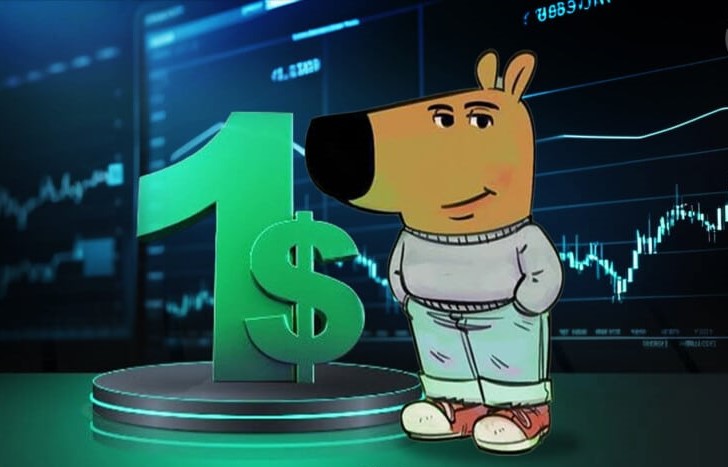
Everyone has heard of Bitcoin and Ethereum. While these cryptocurrencies aim to establish decentralized forms of payment and financial independence, some internet users see the crypto space as a way to get filthy rich quick. Many exploit this opportunity by creating their own alternative coins, commonly referred to as “meme-coins.” As the name suggests, meme-coins are typically based on trending internet memes. This is handy because memes are an integral part of the crypto community, enabling these coins to generate massive hype quickly through viral sharing.
The Nature of Meme-Coins
In most cases, meme-coin developers prioritize neither technical sophistication nor practical utility. Instead, their focus lies in exploiting speculative markets. Many meme-coins are built on the Solana blockchain, which offers fast transaction speeds and low fees, making it an ideal choice for such projects. However, these coins are often created with malicious intent, such as rug-pull schemes or pump-and-dump operations. In these cases, creators inflate the coin’s value by generating excitement on social media platforms like Instagram, TikTok, X, Discord, and Reddit, only to sell their holdings as soon as the price surges. This leaves unsuspecting investors holding worthless tokens.
How Meme-Coins Operate
Typically, only a small group of early investors (usually the creators of the coin)—often referred to as “whales”—reap the benefits of a meme-coin’s rise. During its early stages, when prices are negligible, these whales accumulate the majority of the supply. As hype builds, demand surges, causing the price to inflate exponentially. At this point, whales start selling their holdings to lock in profits. This triggers panic among other investors, who rush to sell their tokens, leading to a liquidity crunch and a sharp price collapse. Soon, the coin becomes virtually worthless, signaling its demise. Inevitably, though, it is quickly replaced by a new meme-coin, continuing the cycle.
Examples of Recent Meme-Coins
Recent examples of meme-coins include $pnut, $wif, $moodeng, $bonk, and $chillguy. All of these were launched either this month or in late October, with $chillguy being less than a week old at the time of writing. Despite their short lifespans, these coins have achieved daily trading volumes in the hundreds of millions or even billions of dollars. For reference, Bitcoin’s daily trading volume is around $100 billion. This disparity highlights the extreme volatility of meme-coins, as they typically have small market caps—often just double their daily trading volumes—leading to wild price fluctuations.
A Case Study: $chillguy
To illustrate how meme-coins can generate massive returns, let’s analyze the case of $chillguy. Suppose you invested $100 on November 15 after hearing about the coin from a friend. At its opening price of $0.002134 per token, you would acquire 46,860 tokens. Five days later, you sell your tokens at a price of $0.5139 per token, netting approximately $24,081 (excluding fees). Congratulations, you just achieved a staggering 24,100% return on your investment.
However, such scenarios are extremely rare. Most successful meme-coin investments yield returns in the range of hundreds to a few thousand percent. Additionally, with thousands of meme-coins flooding the market, it’s nearly impossible to predict which ones will “moon” without insider information. As a result, investing in meme-coins is more akin to gambling than a sound investment strategy.
The Meme-Coin Craze and FOMO
The meme-coin frenzy shows no signs of slowing down. Observing platforms like X and TikTok reveals a pattern of investors hopping from one coin to the next. For instance, an X user named @kkashi_yt recently reported earning $1.1 million from a $498 investment in $FATHA, a coin less than a day old at the time of writing. In the comments section, users were already promoting the next big meme-coins, such as $speedy and $normie. Similarly, during the $chillguy surge, a new coin called $comeback gained attention as investors scrambled to avoid missing out on another opportunity.
This behavior is fueled by FOMO (fear of missing out), a psychological phenomenon that compels individuals to invest impulsively, driven by the fear of missing lucrative gains. As long as this mentality persists, meme-coins will remain a fixture in the crypto landscape.
Final Thoughts and Resources
While meme-coins can offer astronomical returns, they are highly speculative and fraught with risk. They are best approached with caution and viewed as a form of gambling rather than a reliable investment. If you’re curious to learn more or participate, consider exploring platforms like Raydium, Uniswap, Coinbase, Telegram bots like Trojan, BullX, Pepeboost, and tools such as Phantom, ZelFi Guru, and Dexscanner.
In conclusion, meme-coins may offer the allure of overnight wealth, but the reality is that few investors succeed, and in 99.99999% of cases, your 5$ investment will not yield any gains. As with any financial decision, it’s essential to trade at your own risk and never invest more than you can afford to lose.
– Deniss Jonins