
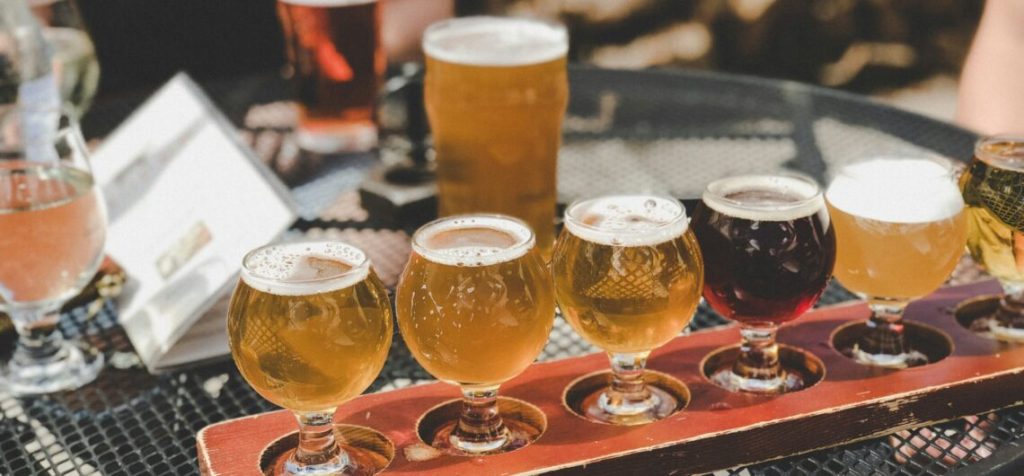
Economists usually rely on complex indicators to predict GDP growth. Statistics like interest rates, inflation and unemployment are usually used to understand where the economy might be moving. However, unfortunately, these indicators are often released with delays. But what if I told you that the answer to predicting the economy might be sitting in your fridge? What if GDP growth could be predicted using beer consumption? Sounds weird, right? But when you think about it, it kind of makes sense.
Since beer is a discretionary good, people don’t need it to survive, so when money becomes tight or financial worry increases, beer is one of the first things people cut back on. On the other hand, if people are feeling good about their economic situation and have some extra cash, they’re probably going to buy more beer, especially at bars and restaurants.
GDP is an abstract number that most people never think about, but buying beer is a regular decision made by millions of consumers. If people feel optimistic about their financial situation, they are more likely to spend money on fun activities like going to bars and restaurants or buying alcohol. If they feel worried about the future, they may stay home more and spend less. These behavioral changes can happen quickly, while GDP statistics take time to capture them.
Existing research and historical patterns suggest that beer consumption often declines before economic downturns (Colen & Swinnen, 2016). For example, during recessions, households tend to reduce spending on non-essential goods. In several European countries, beer sales dropped before GDP decreased during major economic crises. This suggests that beer consumption could act as a potential indicator, particularly in countries where beer is a major part of consumer spending.
But before we start using beer sales to predict the next recession, there are some big problems with this idea. Firstly, people’s habits can change. Some could be drinking less because of health trends, or choosing non-alcoholic beers. So, if beer sales go down, is it because the economy is bad, or just because people are making different choices? Also, governments love to tax alcohol. If they suddenly raise taxes on beer, the price goes up and people buy less, but that doesn’t mean the economy is declining. It just means beer got more expensive.
There are also strong differences between countries. In places where beer consumption is already low, it may not provide much useful information. Seasonality is another issue, since beer consumption tends to rise in summer and fall in winter. These aspects must be adjusted for in any analysis, otherwise they can give misleading indications.
In conclusion, beer consumption is not a perfect or universal predictor of GDP growth. However, it may still be a surprisingly useful complementary indicator. Beer consumption is more of a fun economic indicator than a reliable one. It can give you a hint about how everyday people are feeling – if bars are empty on a Friday night, something might be off. But you definitely shouldn’t bet your savings on economic predictions based on beer consumption. It’s a cool idea that reminds us that the economy isn’t just about charts and numbers.
-Kārlis Alberts Zeltiņš