
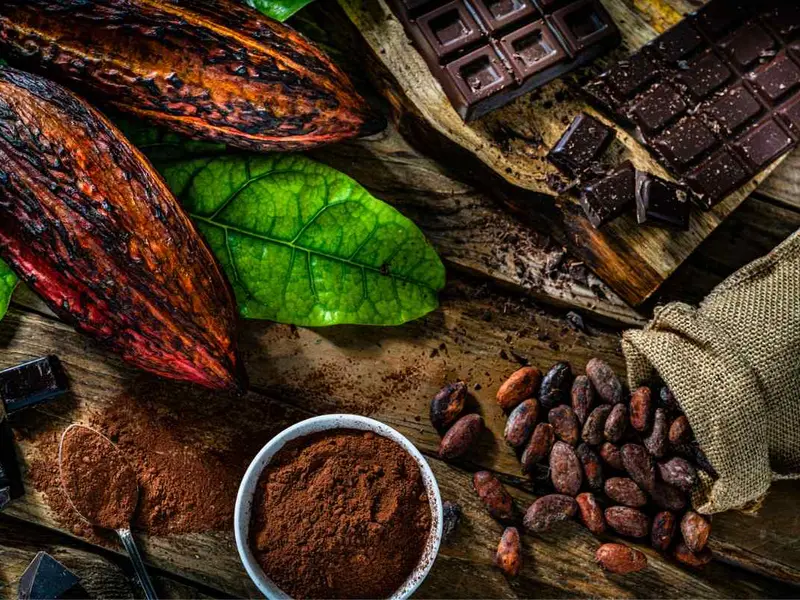
For over a century, chocolate has been just common. From soldiers’ rations in the World Wars to the shelves of supermarkets worldwide, this affordable treat became customary. However, this situation is changing, as cacao, an essential ingredient in chocolate, has recently made waves in the global financial markets. In 2024, cacao prices hit a historic high of $12,000 per ton, marking a 43% increase compared to the average price in 2023 and 380% compared to 2020. This skyrocketing increase has raised questions regarding its speculative behaviour and the structural problems of cacao farming. However, from now on cacao can no longer be considered as a stable and predictable financial instrument.
Potentially, some people might find it sudden, but Cacao is a financial instrument that is traded primarily on the Intercontinental Exchange (ICE) in London and New York, in the form of future contracts. For decades, there was no significant interest in the Cacao market because historically, cacao prices were relatively stable, averaging between $2,500 and $3,000 per ton from 2010 to 2020. However, for the last 2 years, things have changed: speculation and hedging activities in this market have boosted price volatility. In 2024, hedge funds increased their long positions in cacao futures by 15%, betting on further supply disruptions that enhance the speculative behaviour of the price. As a result, since 2022, prices have become increasingly volatile, with a standard deviation of $1,800 per ton in 2024 compared to just $700 a decade ago. For the second year in a row, the future prices have been growing exponentially, so to understand whether the current price is the result of institutional investors’ speculations, or the industry factually faces structural problems it is important to comprehend the supply and demand factors affecting the price.
Cacao is a very demanding plant in terms of the climate. It can be harvested only in the so-called “Cacao Belt”, which represents tropical regions with high humidity, consistent rainfall, and warm temperatures. The largest region that satisfies the criteria is Western Africa, in particular Ghana and Ivory Coast supplying approximately 80% of the global output. According to the International Cocoa Organization (ICCO), global cacao production in 2024 was estimated at 4.7 million tons, down 7.8% from 5.1 million tons in 2023. This decline is primarily attributed to weather conditions in West Africa. The climate in West Africa is becoming unpredictable due to climate change, and the data from 2023-2024 are not favourable for cacao production. The average temperature in Ghana and Ivory Coast rose by 1.5°C compared to the five-year average, reaching 27.8°C. Rainfall levels in Ghana dropped by 15%, while the Ivory Coast experienced a 20% decrease, significantly below historical records. This combination of higher temperatures and reduced precipitation is noxious for cacao trees by disrupting their flowering and pod development and creating an environment for fungal diseases like black pod disease.
The effects are clear: in 2024, global cacao production declined by 7.8%, from 5.1 million tons in 2023 to 4.7 million tons. Small farmers, who dominate the region’s cacao cultivation, lack the resources to adapt quickly to these climatic shifts, further exacerbating the supply crisis. Besides, the demand for cacao consecutively increases, especially in China and India. In 2023, the consumption in these two countries grew by 8.3% and in 2024 the projected increase is 10%. As demand outpaces supply, cacao stocks are exhausted rapidly. At the end of 2024, global cacao stockpiles are estimated at 1.4 million tons, a 33% decline from 2023. This supply-demand gap is a key factor pumping up prices.
The data above is evidence that the problem exists, and the current record price is actually a reflection of the huge deficit, not just the hedge funds’ speculations. The economic implications of skyrocketing cacao prices go far beyond the increase in the average chocolate bar prices. The chocolate market where cacao is the essential source is valued at $130 billion in 2023, it is expected to reach $145 billion by 2025, according to Statista, and understanding the current situation is important because the entire industry may change.
As abovementioned, cocoa trees are very demanding to the climate, if farmers in Ghana and Cote d’Ivoire do not invest in ecology, then the deficit will most likely continue. As cocoa is cultivated by many small, independent enterprises, it is impossible to count on large environmental projects to change the climate or adapt trees to new circumstances. However, will the customers notice these changes and reduce consumption? Despite rising prices, the demand for chocolate is expected to remain inelastic. In other words, customers are ready to pay higher prices for chocolate without reducing consumption. In 2023 the chocolate bar price increased by 15%, but the demand didn’t decrease. In price-sensitive markets, manufacturers may mitigate the impact of higher cacao costs by reducing product sizes and adjusting recipes to use less cacao or substitute with other ingredients. Large corporate players like Nestlé face minimal financial risk from rising cacao prices, as they can pass costs onto consumers or offset them by increasing sales of non-cacao-based products. However, small chocolate brands and companies focusing solely on cacao-based goods face escalating input costs. If cacao prices surpass $13,000 per ton in 2025, industry consolidation could accelerate further, reducing competition and potentially driving chocolate prices even higher for consumers. The cacao crisis not only reshapes profit margins but also threatens the diversity of the global chocolate market.
In conclusion, the 2024 cacao price surge is not temporary; it reflects deep structural changes in the industry. For investors, cacao futures will remain a high-risk, high-rewarding option; however, understanding the processes that extend beyond the financial markets is crucial. Once classified as monopolistic competition, the industry is now undergoing significant changes, as high input costs force small and medium-sized firms to exit the market. Further market consolidation around large corporations like Nestle or Mars will shift the industry toward oligopoly. In the end, cacao should no longer be considered as a stable and predictable financial commodity, and chocolate may no longer be as affordable as it used to be.
– Pavel Orlov